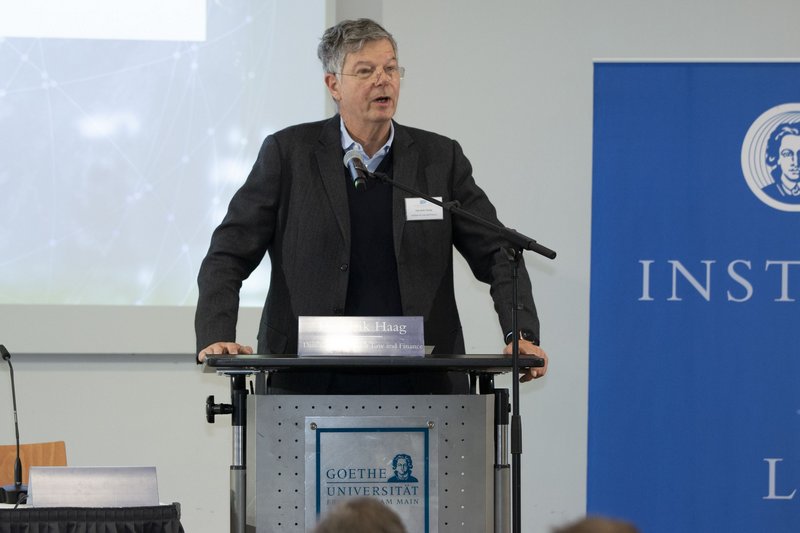
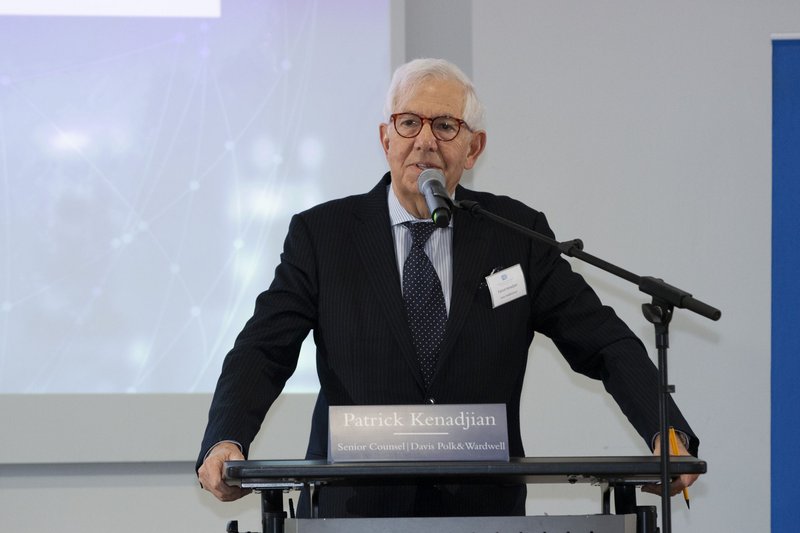
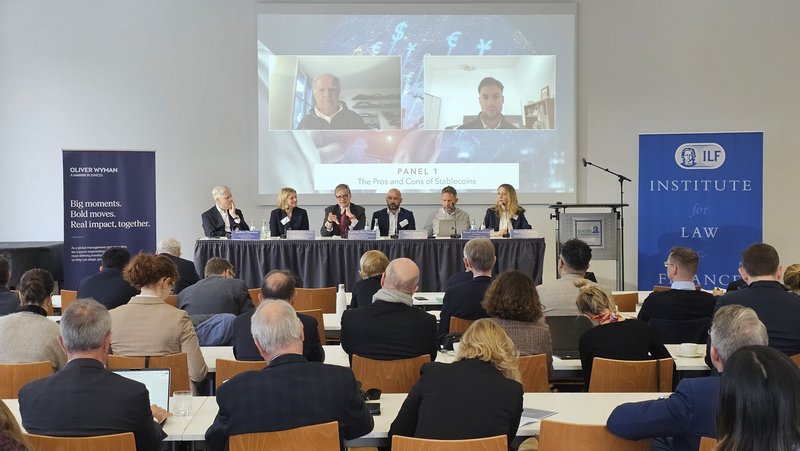
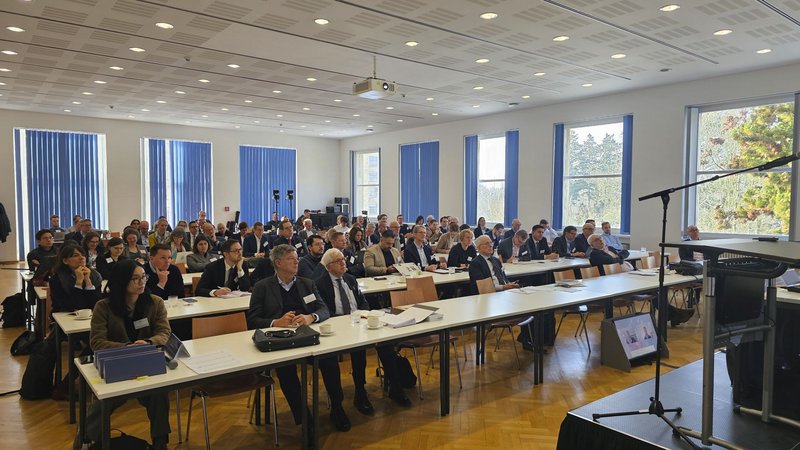
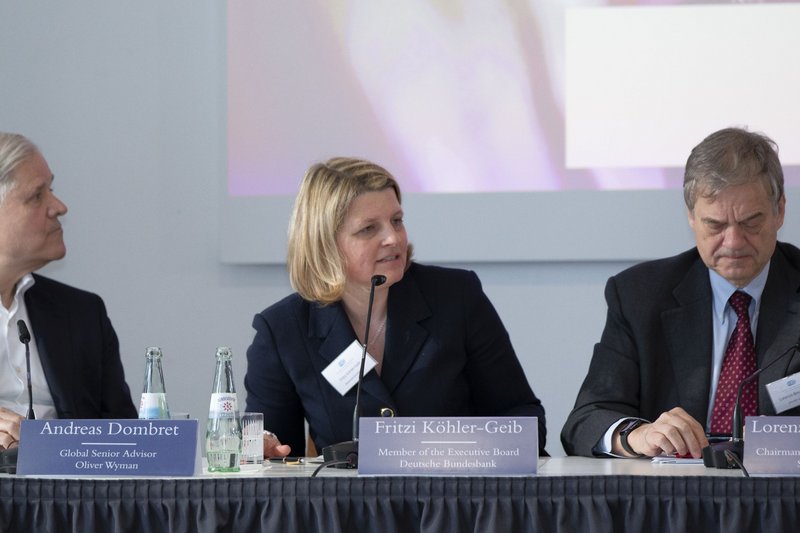
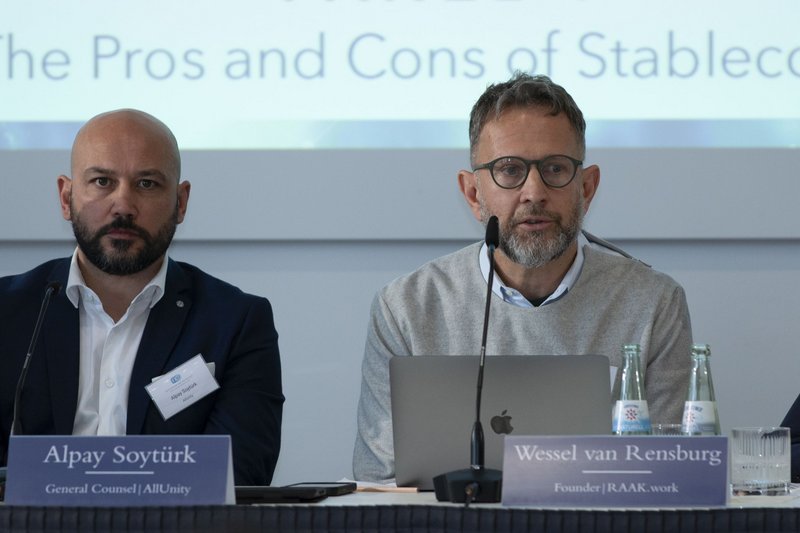
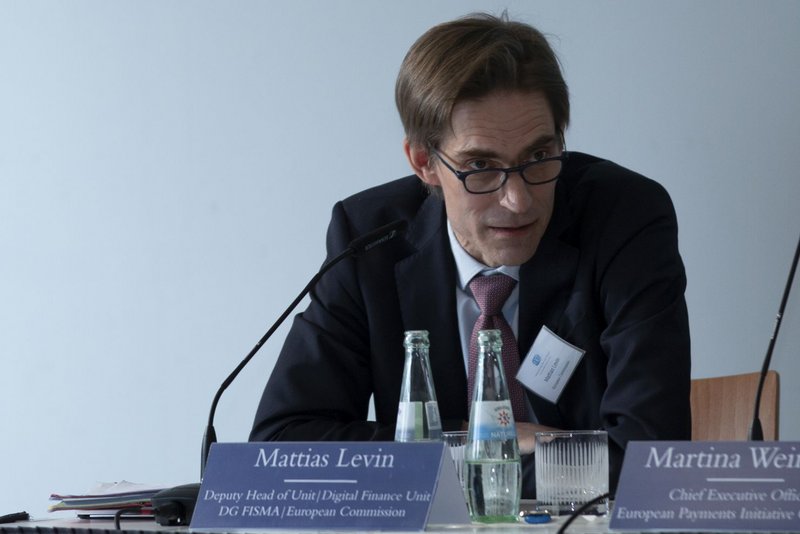
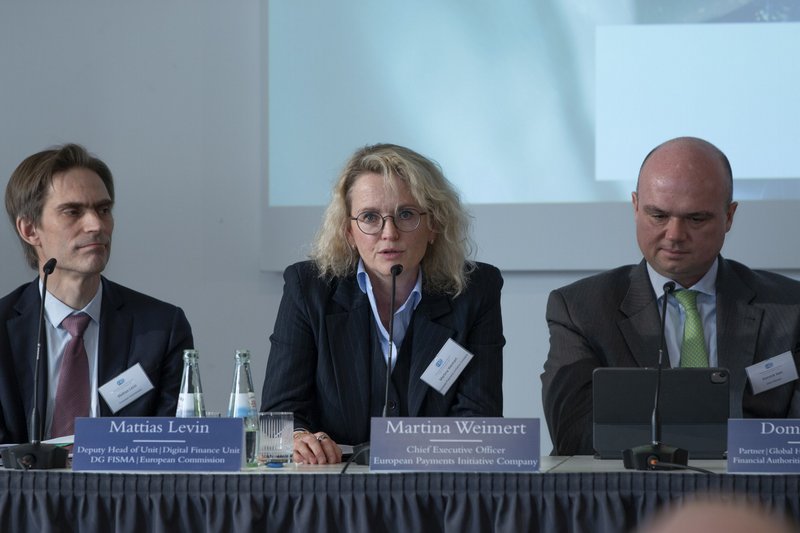
On Tuesday, 27 January 2026, the ILF hosted the 14th in its series of Conferences on the Future of the Financial Sector, co-chaired by Andreas Dombret and Patrick Kenadjian, with the support of our knowledge partner, Oliver Wyman and of our sponsors Amazon Web Services and the European Banking Federation, on the topic of Stablecoins, CBDCs, Tokenization – The New Frontiers of Money?
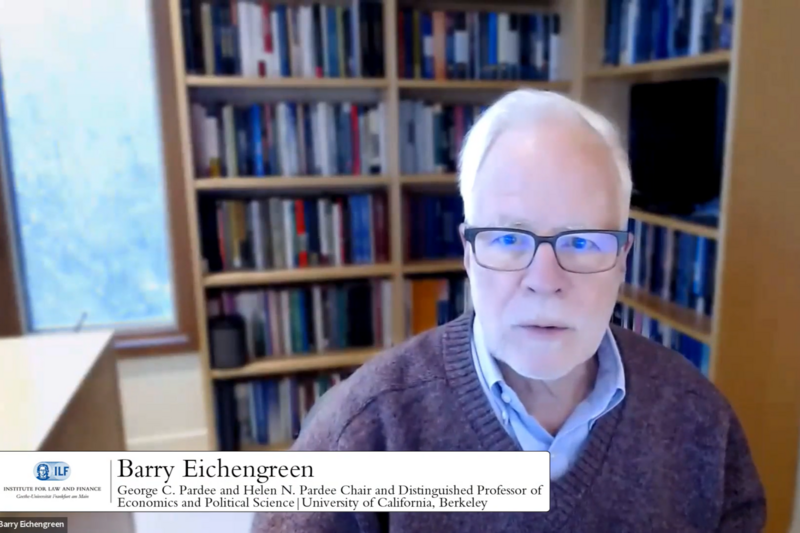
The conference started with a keynote address delivered by Barry Eichengreen, George C. Pardee and Helen N. Pardee Chair and Distinguished Professor of Economics and Political Science at the University of California, Berkeley, on the topic of Stablecoins and the GENIUS Act: How Should Other Countries Respond? After reviewing the contents of the GENIUS Act and the motivations behind its passage, he focused on the challenges for Europe, and emphasized that not reacting was not an option, but that no single course of action alone was likely to be sufficient. Instead, he advocated a diversified response, including the development of a local currency alternative to dollar denominated stablecoins, the linking of fast-payment systems to other countries and the continuing studying, piloting and rolling out of CBDCs as the route most likely to be effective.
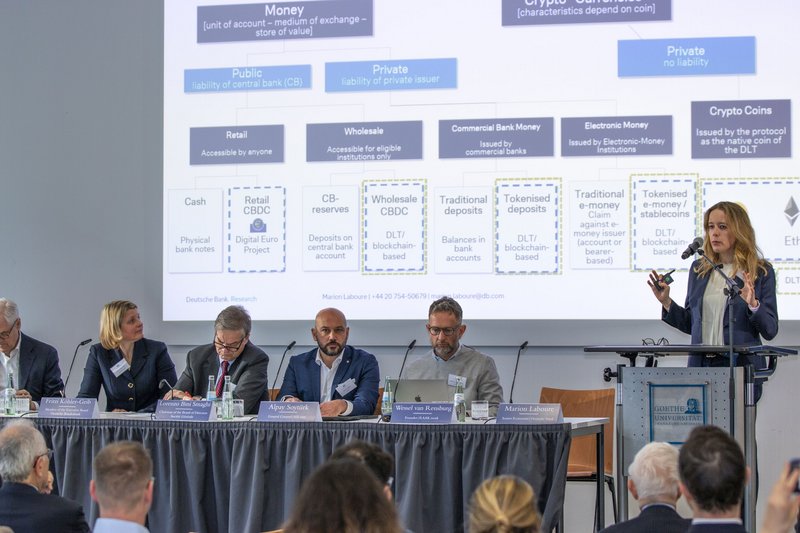
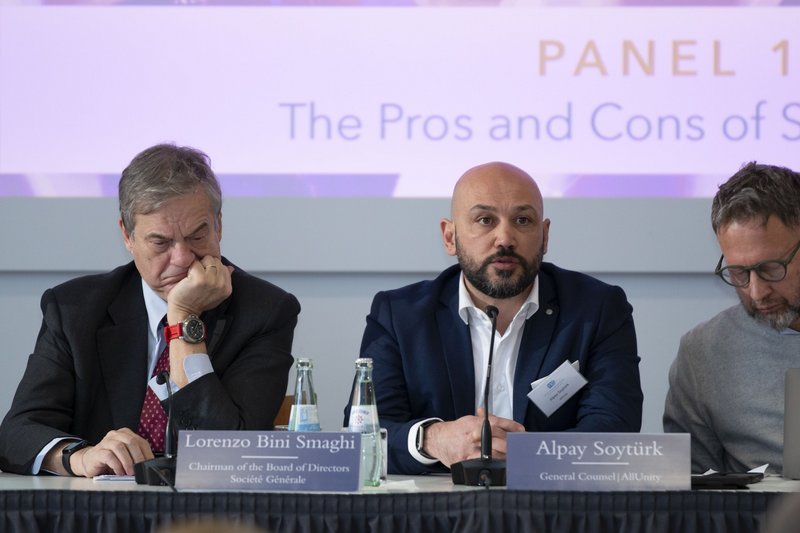
The first panel of the day was moderated by Andreas Dombret and was devoted to an examination of Stablecoins themselves. Marion Laboure of Deutsche Bank and Harvard provided an overview of the origins and development of stablecoins and the risks they can present to the financial system. Her presentation was followed by a panel discussion of the use cases for Stablecoins beyond the crypto sphere where they originated, competing technologies, including fast-payment systems and tokenized bank deposits, their status under the EU’s MiCAR regulation, and their place within the wider ambit of the future of private money.
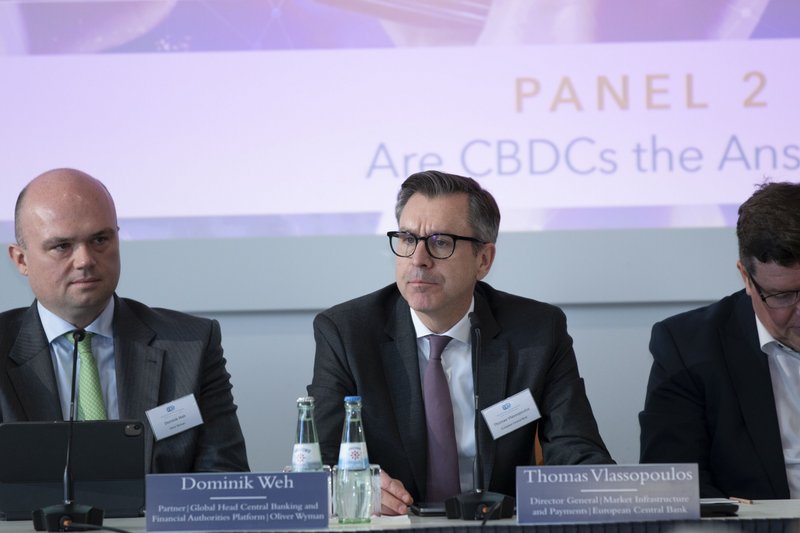
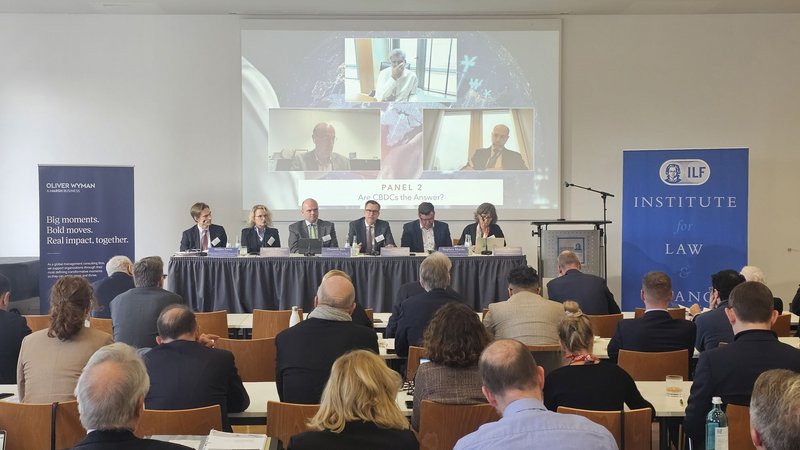
The second panel, moderated by Stephen Martin of our sponsor AWS, was devoted to whether central bank digital currencies (CBDCs), in either wholesale or retail form are the answer to Stablecoins. Professor Lucrezia Reichlin of the London Business School in her impulse statement emphasized that money was by its nature hybrid, involving both public and private money, reviewed the main arguments in favor of CBDCs and concluded that, without access to central bank money, no monetary system can be fully risk free. The panel followed with a spirited and highly sophisticated discussion of the distinction between money and payment systems and the implications of this distinction for the perceived necessity of retail versus wholesale CBDCs.
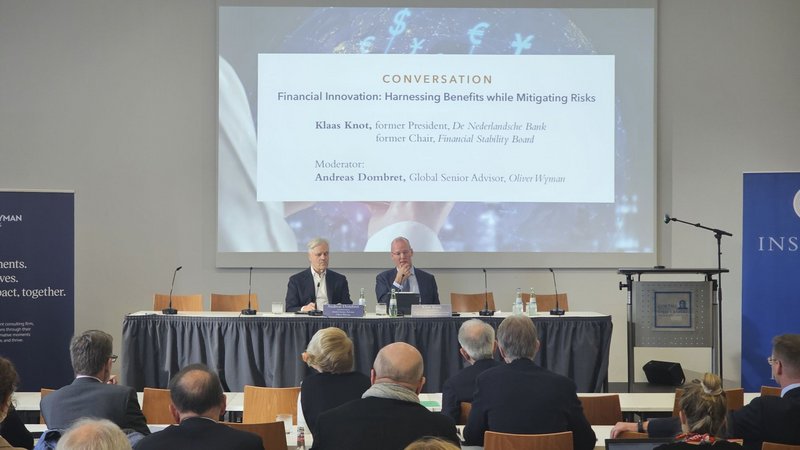
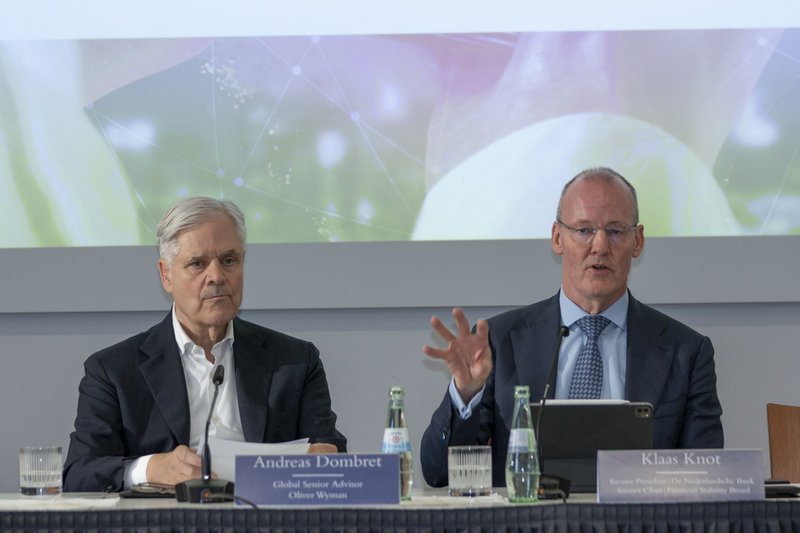
Andreas Dombret conducted a conversation on Financial Innovation: Harnessing Innovation while Mitigating Risks, with Klaas Knot, former President of De Nederlandische Bank and former Chair of the Financial Stability Board, which ranged widely from considering how the post 2008 financial reforms had moved the center of risk in the financial sector from credit risk to liquidity risk, how the growth of private credit, which had developed to fill a gap in credit provision between bank debt and publicly traded bonds was now developing into a locus of potential procyclical risk. Turning to the central topic of the conference, he noted that monetary solutions should be viewed as complementary and not exclusive, and that private money was and is by its nature runnable and thus cannot exist alone. He agreed with speakers on the prior panel that banks should devote more attention than they appeared to be in tokenized deposits rather than focusing on Stablecoins.
The second keynote was delivered by Hyun Song Shin, Economic Advisor and Head of the Monetary and Economic Department at the Bank for International Settlements, on the topic of money as a coordination device: some lessons from history. Moving swiftly from the Bank of Amsterdam in the 16th century to today, he explained how the rewards system for validators in blockchain structures leads to congestion in those systems and that there was an inevitable tradeoff between the degrees of decentralization and of capacity constraints. He explained how the fragmentation on level 1 blockchains has led to the development of strategic substitutes and how layer 2 blockchains seek to deal with the congestion issue by, in essence, superimposing ever more centralized coordination on the system.
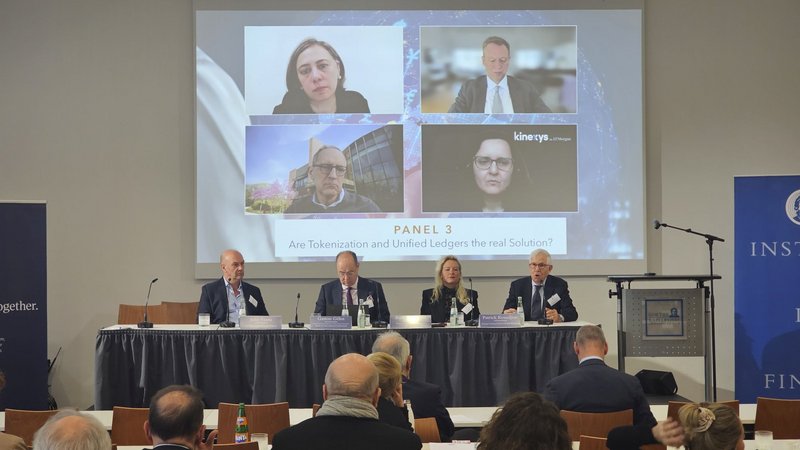
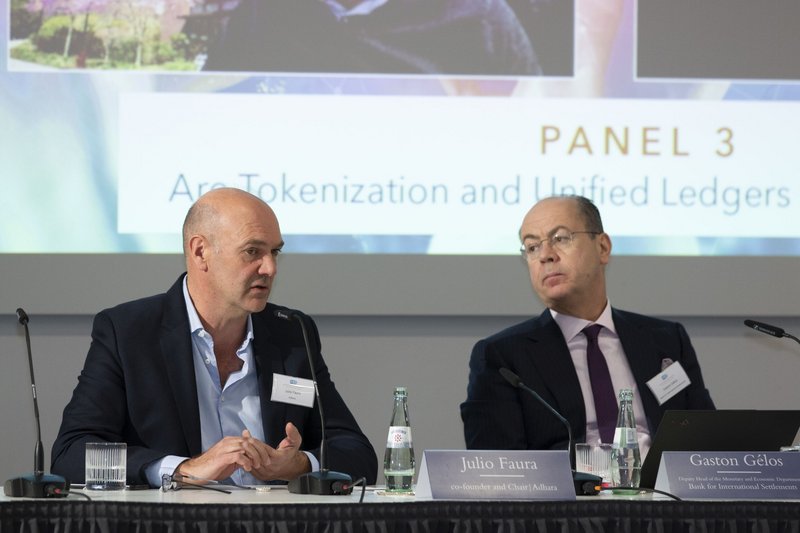
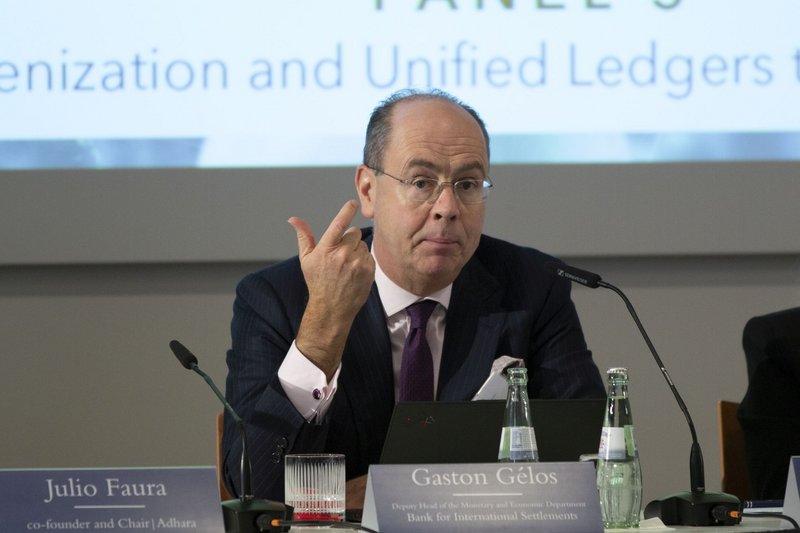
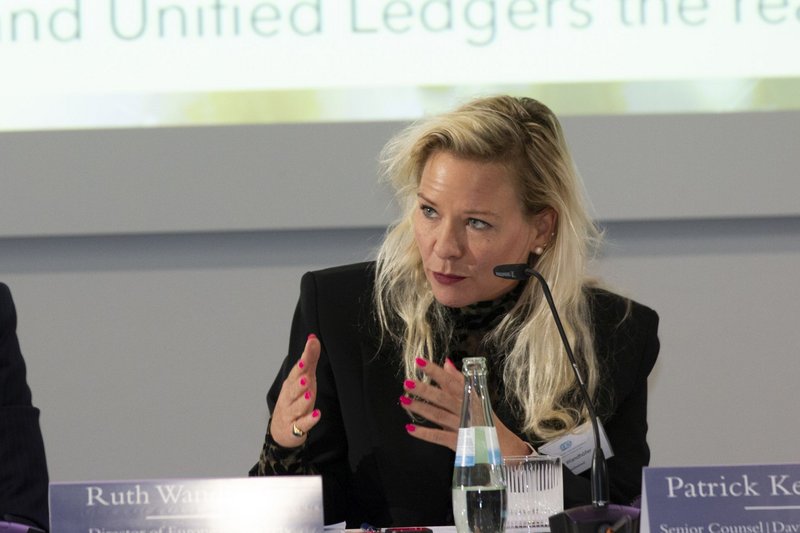
The third panel was moderated by Patrick Kenadjian and was devoted to asking whether Tokenization and Unified Ledgers are the real Solution to Stablecoins. This is the idea, which originated with the BIS, that tokenizing bank deposits and placing them, together with tokenized central bank money and other tokenized assets on a unified – not a single – ledger presented a better solution to the challenge presented by Stablecoins. Gokce Ozcan of Oliver Wyman presented a very useful overview of tokenization, especially as applied to bank deposits. Gaston Gelos, of the BIS followed with a description of the BIS’s original proposal. The panel then took a very deep dive into tokenization, both of bank deposits and of real-world assets, including the ease or difficulty with which they could be accomplished, reviewed the existing tokenized deposit projects, in particular those pioneered by JP Morgan, and concluded with a brief but sobering overview of the risks and issues which tokenization brings with it.
Concluding remarks were delivered by Ignazio Angeloni, former member of the Supervisory Board of the European Central Bank, who emphasized that the issue of Stablecoins is primarily political and needs to be addressed in that context. He examined certain key distinctions between MiCAR and the GENIUS Act, particularly with respect to redemptions, expressed concern that if the retail digital Euro turns out to be a flop, it could have important repercussions for the reputation of the European Central Bank, and agreed with earlier speakers on the importance of wholesale CBDCs.
We thank our cooperation partners as well as distinguished speakers and participants who attended the event, both at Campus Westend as well as online, making it a tremendous success!